
Basement Flooring in Olympia Heights FL - A Floor Chosen for Your Flood Zone
Bare, worn or water-damaged floor below ground? We help you pick a basement floor that suits your flood zone, then install it right.
- Fully licensed and insured.
- Free estimates at your property.
- We reply within 1 business day.
What goes into a basement floor, from slab prep to the finish?
Basement flooring in Olympia Heights is the finished surface we put down over the concrete in a basement or any below-ground room, so a bare or worn slab becomes a floor you can walk on, clean and actually use. It usually comes with grinding off whatever's on the slab now, and which floor makes sense depends a lot on your flood zone.
Most basement calls I get start with a floor that's bare, worn out or already ruined by water once. The price mostly comes down to the size of the room, how much old floor or coating has to come off and which surface you pick, and the schedule turns on how much prep the slab needs and how long the finish has to cure before you can use the room. I'll give you your own figure in a written estimate once I've seen the slab.
How do you know your basement floor needs redoing?
Old coating peeling up
If paint or an old coating is lifting at the edges or in patches, the prep under it was usually rushed or water got beneath it. The longer it sits, the more of it lets go, and all of it has to come off before a new floor will hold.
Bare slab that sheds dust
Plain concrete that leaves gray dust on your shoes is wearing away at the surface, and it'll keep tracking that dust through the house. It's also a good place to start from, since a dusting slab usually grinds clean and takes a new finish well.
Water already ruined the floor
Carpet, wood or vinyl that stayed soft, smelly or warped after water came in usually can't be dried back to good. If you put the same kind of floor back, you're likely to pay for it twice, so this is the time to choose something that handles water better.
Often paired with basement flooring
Concrete Grinding & Surface Preparation
Worth it when an earlier floor failed, because grinding strips what's left and opens up the concrete so the new finish bonds to it instead of peeling.
Concrete Sealing
A good fit for storage rooms and utility spaces where you just want bare concrete that doesn't dust, stain or soak up spills.
How we handle basement flooring, start to finish
Before we talk about looks, I ask about your flood zone and your insurance, because both shape which floor makes sense below ground, and I'd rather steer you off a floor now than watch you pay to replace it later. Then I'll show you the options that fit and point out which ones stand up better to water. Once you pick, our crew clears the room, grinds the slab down to clean concrete, fills cracks and chips so they don't show through the new floor, puts the floor down and lets it cure before anyone walks on it. Prep is the part you won't see when we're done, and it's the part I watch closest, because that's where most failed floors I've seen went wrong.
If paint, glue or a worn-out coating is still down, concrete grinding and surface preparation comes first and takes the slab back to bare concrete. When you'd rather keep the concrete as it is, concrete sealing is the lighter, cheaper route, and sometimes it's the one I'll recommend. If the slab itself is cracked through or sinking, that's repair to the slab, a separate job from the surface, and I'll tell you to get it fixed before we lay anything on it.
Coated or polished concrete
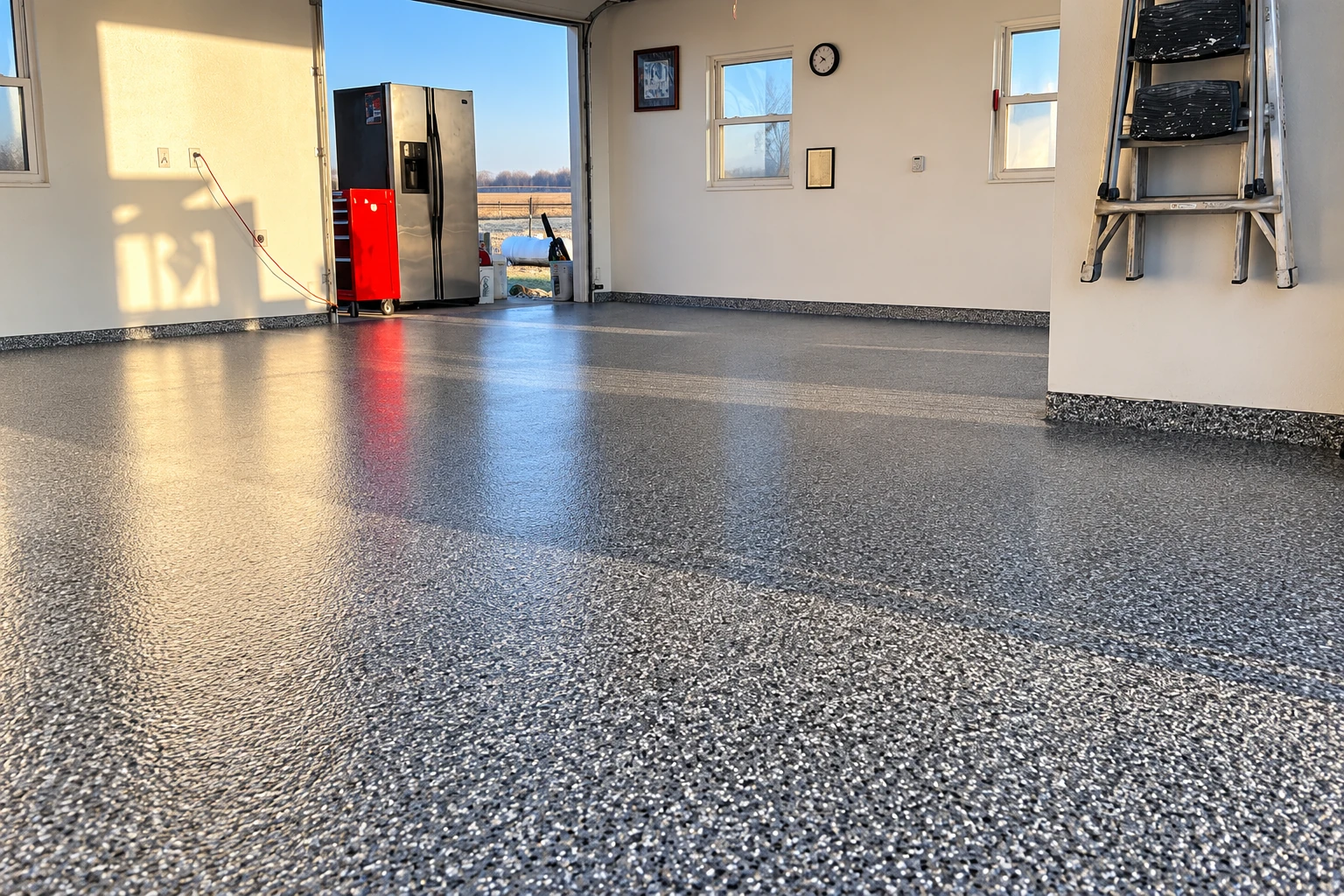
This suits most basements, and it's what I'd point you to in a flood zone, because the floor is still the slab with a hard finish on it, so there's no soft layer to soak up water and come apart. Epoxy and polyaspartic coatings give you a wipe-clean color, while polished or stained concrete keeps the look of bare concrete.
Tile, vinyl, cork or wood
These are common basement choices and they suit a dry room where you want a warmer look underfoot. Wood, parquet and cork usually take water the worst, so if your house sits in a flood zone, I'll tell you straight that you're likely to be tearing them out after a flood.
Get a written estimate for your basement floor
Send the form and we'll reply within one business day to set a time. I'll come look at the slab and leave a free written estimate, with no obligation. Calling (786) 408-1023 works too.
Call (786) 408-1023Why Olympia Heights homeowners call Westmark Epoxy Floors for basement floors
I write every estimate myself
I come out to look at your slab and write the estimate myself, and our installers do the prep and the coating. So the price comes from someone who stood on your floor, not from a phone call.
Prep first, since 2017
I came up through flooring sales watching coated floors fail because somebody rushed the prep, so when I started this business in 2017, prep became the step we don't cut short. If your slab isn't ready for the floor you want, I'll tell you straight.
Licensed and insured for Miami-Dade work
We're fully licensed and insured. Miami-Dade County licenses the contractors and tradesmen who work here, so it's fair to ask any crew you're comparing how they're licensed before you sign.
We handle the permit question
Before we schedule, we find out whether the county or your city covers your property, since that's who answers permit questions for your address. If the job needs a permit, we apply for it as the licensed contractor and handle the paperwork and inspections.
On a basement, the floor you pick matters less than whether it suits your flood zone and the slab under it is ready. Tell us about your room and I'll come take a look.
What happens after you call about a basement floor?
Call or send the form
Reach us at (786) 408-1023 or through the form, and we'll get back to you to set a time. Tell us roughly how big the room is and what's on the floor now, so I come out knowing what to look for.
I look at the slab
I come out, look at the concrete, ask how you use the room and leave you a written estimate. You have the price in hand before you decide anything.
We prep, install and walk it
Once you say yes, we set the date and our installers do the prep right before anything goes down. When the floor's done, I walk it with you before we pack up.
Common questions
How much does basement flooring cost?
Across the US, a basement flooring installation usually runs about $2,500 to $8,000 per job, and that's the national market, not our price. Where yours lands depends on the room size, how much old floor or coating has to come off and which surface you choose. I'll give you your own number in a written estimate after I see the slab.
Does flood insurance cover basement flooring?
In most Special Flood Hazard Areas, the high-risk zones on FEMA's flood maps, NFIP flood insurance won't pay to replace basement finish materials, even ones built to resist floods. So if your house is in one of those zones, plan on covering a new basement floor yourself after a flood.
Do I need a permit for new basement flooring in Miami-Dade?
Miami-Dade County's 2021 exemption guide says covering a floor or slab with carpet, tile, brick or wood doesn't need a building permit, though other agencies may still require approval. Coatings and polished concrete aren't on that list, so ask the county's permitting office, or your city's if your property falls under one, about those floors.
How do I know if a basement floor is flood damage-resistant?
FEMA counts a material as flood damage-resistant when it can sit in direct contact with floodwater for at least 72 hours and need no more than cosmetic repair afterward. In Special Flood Hazard Areas, the NFIP requires that kind of finish below the base flood elevation, the height a major flood is expected to reach. If you like a floor, ask us or any installer you're comparing whether it meets that test.
How do I find out what flood zone my house is in?
Search your address on FEMA's Flood Map Service Center and it will show the flood zone your property sits in. Do it before you pick a floor, because the zone decides whether flood rules apply to your basement and whether Florida's small project permit exemption is open to you.
Does Florida's $7,500 small project permit exemption apply to basement floors in Olympia Heights?
Only if your property meets the criteria the county lists and isn't in a flood hazard area. Since July 1, 2026, a Florida law lets some small home projects valued under $7,500 go through a simplified process with no building permit, but properties partly or entirely in a flood hazard area aren't eligible, and electrical, plumbing, structural, mechanical and gas work still always needs a permit in the county. We're based in Olympia Heights and work across the cities around it in Miami-Dade County, so we sort out which rules fit your address before we plan the job.
Book a look at your basement floor
Call (786) 408-1023, send the form or email hello@olympiaheightsepoxyandconcreteflooring.com with your address, flood zone, room size and the floor you have in mind, so I come out already knowing which options fit.